![Fated mates in spicy high-stakes PNR]() Fated mates in spicy high-stakes PNR
Fated mates in spicy high-stakes PNR
Historical Saga about an Irishman, Indian Woman and Supernatural White Horse
I Am the White Horse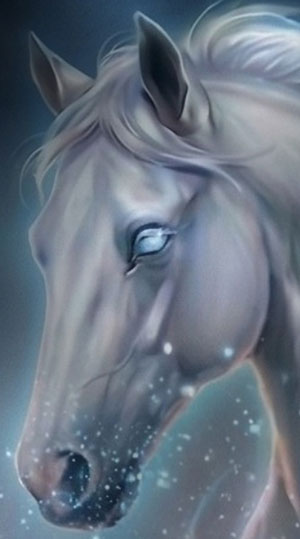
“The characters are finely drawn and the settings, activities and conversations
are masterly created to historical accuracy. It is a thoroughly enjoyable tale
that will keep readers turning pages.”
—Alan M. Petrillo, Author of 3 Victorian mystery novels and 5 nonfiction books
Sources
It is not unusual for fiction authors to discuss the factual or historical basis for events, characters and dialogue, particularly if the story takes place in another era like the Victorian.
Fiction writers such as Stephen King, Ken Follett, and Tom Clancy are known for providing references to their research and the people who helped them shape their stories.
In writing I Am the White Horse, we found that no matter how much literature we read about the Indian cultures of the 1800s, it was not possible to fully understand all of the nuances, implications, practices and historical context.
For help with the Apache characters, historian Joe Saenz of the Chiricahua Apache National Foundation, (chiricahua apachenation.org), provided detailed notes and suggestions for improving the Apache characters’ actions and dialogue.
For help with the O’odham
culture, Author/Book Publisher and Teacher José “Husi” Cázares, MA, MS, CCC-SLP,
offered insight into the Tohono O’odham characters and actions. Husi and his
wife, Kerrie Ann, write and publish books based on the Tohono O’odham culture.
Sources for Specific Manuscript References
Chapter 1. A Prayer for the damned. Excerpt from Anonymous Combat Veteran, “A rayer to Santa Muerte.” The Havok Journal. Published October 7, 2024. https://havok journal. com/2024/10/07/a-prayer-to-santa-muerte. Used with per-mission.
Chapters 7, 15. Little Dove discusses the book Jane Eyre: An Autobiography and its characters, Jane and Rochester, written by Charlotte Brontë. It was first published on October 16, 1847, by Smith, Elder & Co, London, released in three volumes under the pseudonym, Currer Bell.
Chapter 8. From 1831 to 1834, about 17,000 Choctaw Indians were driven from their ancestral lands in Mississippi to Oklahoma. On the Trail of Tears, as many as 6,000 died from starvation and disease. In 1847, despite their poverty, the Choctaw Nation sent $170, equivalent to more than $5,500 today, to the starving Irish.
Chapter 9. At the beginning of the 1800s, there were a handful of Indian newspapers, often published in both English and in their native tongue. It was reported that by the end of the century there were as many as 250.
Chapter 18. The Irish immigrants in America during the 1800s were considered non-White. They were often called “white Negroes,” “Negroes turned inside out” or “Black Irish” because they threatened workers with their cheap labor.
Chapter 19. Placerville, CA (aka Hangtown) still exists and has a rich history. The Gold Bug Mine has tours. One of North-ern California’s most haunted hotels, the Cary House Hotel, continues to welcome guests, whether human or not.
Chapters 21, 23. Ghost girl. According to Cary House operations manager, Josh Salmonson, a five-year-old girl may have gone missing in the hotel around 1858. “People say they see her ghost wandering the hallways.” He thinks he caught a glimpse of her. From the Mountain Democrat, the oldest newspaper in California. Dec. 29, 2017.
Chapters 25, 32, 35, 38. Go to Sleepy, li’l baby. Originally sung and written by Annie Little, born into slavery in 1856.
Chapter 28. Little Dove relates to the story in The Red Badge of Courage, a novel written by Stephen Crane, published in 1895. It tells the story of a young private in the Union Army during the American Civil War who experiences fear and courage. It has never been out of print.
Chapter 32. Betty sings the Irish Emigrant song she’d heard steerage women sing on the RMS Majestic. The excerpt in this chapter is from the sea shanty, All Bound to Go, likely written in the 1840s or 1850s. In Frank Shay’s American Sea Songs and Chanteys, pub. Jan. 1, 1924, it provides two melodies and three sets of lyrics.
Chapter 34. I looked over Jordan and What Did I See (Swing Low, Sweet Chariot). Written in 1865 by Wallace Willis and his daughter, Minerva Willis, a Choctaw freedman and freed-woman granted citizenship by the Choctaw Nation.
Chapter 38. Reservation food, cloth, and wood for cooking were sometimes stolen by Indian agents, leaving the Apache people without resources. https://www.scat-nsn.gov/our-history/. Events at San Carlos Reservation are fictional.
Chapters 38, 39. I am the daughter of the earth and water. From the poem Cloud, by Percy Bysshe Shelley, 1820.
Chapters 40, 44. Yowa. Adapted from Kongo Yowa cosmogram, author Hoodoowoman, 3/19/21. Wikimedia Commons license CCBY-SA4.0. https://commons.wikimedia. org/wiki/ File:Kongo_Yowa_Cosmogram.png#filelinks. Free usage.
Chapter 41. Pulling the baby… Waters of the earth and of our bodies are the same... Adapted from Katsi Cook, Mohawk Midwife. https://indigenousmidwifery.ca/wp-content/uploads/ 2017 /03/ NACM_Booklet_Pregnancy_2017_MED.pdf
Chapter 46. Yo way ee oh. Apache Honoring Song in public domain. Traditional chant. heatherhoustonmusic.com
Additional Source Material for I Am the White Horse
Why is listing source material for a fiction novel important? Sometimes the reader wonders…is this or that true, or did the author make it up? Particularly, in this day and age, when some people use "alternative facts" to fool you and Artificial Intelligence (AL) is running amok and, at times, making stuff up, it is comforting to know that the historical background and events depicted in a story you have committed your time to is well researched.
When it comes to historical drama, such as I Am the White Horse, listing most of the research sources lends credibility to the characters and stories. Hence, here are some (but not all) of the sources used for background to the Native Indian Nations, the Old West, gold mining, slavery, midwifery, Native American genocide, and more as depicted in the story.
A Brief History of the O’odham. Retrieved 7/3/2024 www.nps.gov/articles/oodham.htm.
American Indian Health and Diet Project AIHDP. Retrieved 2/20/2025 aihd.ku.edu/foods/tepary_beans.
Apache Before 1861. Chiricahua National Monument Arizona. Retrieved 11/4/2025 from https://www.nps.gov/chir/learn/historyculture/pre-apache-wars.htm
Apache Clothing. University of Southern California. Retrieved 1/7/2026 from https://scalar.usc.edu/works/american-indian-film-archive/apache-clothing.history?path=apache-southwest-indians
Apache Cooking. Apache did not eat fish or bear meat. University of Southern California. Retrieved 2/9/2026 from https://scalar.usc.edu/works/american-indian-film-archive/apache-cooking
Apache Fire Dance Song. Retrieved 9/28/2025 from https://drumhop.com/music.php?page=128
Apache Girl Names. Retrieved 2/7/2026 from https://www.warpaths2peacepipes.com/native-american-indian-names/apache-names.htm.
Apache Mescalero. Retrieved 2/9/2025 from mescaleroapachetribe.com/our-culture/
Apache Mescalero. Understanding our culture. Taboo animals. Respect for the Apache Elders. https://mescaleroapachetribe.com/our-culture/
Apache Native American burial rituals. Retrieved 1/23/2026 from https://blog.billiongraves.com/native-american-burial-rituals/
Apache Native American Burial Rituals/Cherokee Native American Burial Rituals. Retrieved 3/8/2025. blog.billiongraves.com/native-american-burial-rituals/.
Arizona Forts of the American West. Legends of America. www.legendsofamerica.com. berkeley/beals1/beals1e.htm.
Beverly, Hungry Wolf. Women Warriors. The Ways of my Grandmothers. New York: Quill Books, 1982.
Blakemore, Erin. A century of trauma at U.S. boarding schools for Native American children. National Geographic, July 9, 2021. Updated Oct. 24, 2024. https://www.nationalgeographic.com/history/article/a-century-of-trauma-at-boarding-schools-for-native-american-children-in-the-united-states
Burial customs of the Indians of the southwest. Chapter VIII, The Apaches. www.hintofriches.com/forum/the-hint-of-riches/286390-burial-customs-of-the-indians-of-the-southwest.
Campbell, David H., PhD. Etiquette and taboos of the Native American Tribes—Southwestern Unites States. Liberty University and Grand Canyon University. 2017, Apr 22.
Carle, Peggy. Burial customs of the Indians of the Southwest. Chapter VII, The Apaches. Texas Technological College, Lubbock, TX. Aug. 1941. https:www.hintofriches.com/forum/the-hint-of-riches/286390-burial-customs-of-the-indians-of-the-southwest.
Castetter, E.F., Opler, M.E. The ethnobiology of the Chiricahua and Mescalero Apache: A. the use of plants for food, beverages and narcotics. Ethnobiological studies in the American Southwest. #3. Pages 1-63, 1936.
Castetter, Edward F. and Underhill, Ruth M. Ethnobiological Studies in the American Southwest, Papago Indians. The University of New Mexico Press, Number 275, Vol.4, No.3. 1935, October 15.
Castetter, Edward Franklin; Opler, Morris Edward. The ethnobiology of the Chiricahua and Mescalero Apache, 1936.
Cherokee Native American burial rituals. Retrieved 1/23/2026 from https://blog.billiongraves.com/native-american-burial-rituals/
Chiricahua Apache Historical Summary. Retrieved 11/4/2025 from https://www.dragoonarizona.com/chiricahua-apache/chiricahua-apache-history
Chiricahua Apache in the Chiricahua Mountains. Retrieved 11/4/2025 from https://www.dragoonarizona.com/chiricahua-apache/chiricahua-apache-history/pre-1850s-dragoon-life/chiricahua-mountains
Chiricahua Apache. U*X*L Encyclopedia of Native American Tribes. . Encyclopedia.com. 29 May. 2026. https://www.encyclopedia.com/humanities/encyclopedias-almanacs-transcripts-and-maps/chiricahua-apache
Christian Bible, New Testament. Horses. Job 39:19-25
Color With Leo. What were the Apache colors? https://www.colorwithleo.com/what-were-the-apache-colors.
Cook, Katsi. Traditonal Mohawk Midwife. Retrieved from https://indigenousmidwifery.ca/wp-content/uploads/2017/03/NACM_Booklet_Pregnancy_2017_MED.pdf.
Davis, Britton. The Truth about Geronimo. New Haven: YalePress, 1929.
Evans, Tony Tekaroniake. The Apache woman warrior who helped lead resistance to European invaders.2023, July 12 Updated. Retrieved 7/9/2025 from www.history.com/news/lozen-apache-woman-warrior.
Evans, Tony Tekaroniake. The Apache women warrior who helped lead resistance to European invaders. Updated July 12, 2023. Retrieved 4/5/2025 from https://www.history.com/news/lozen-apache-woman-warrior
Food-Material Culture of the Pima, Papago, and Western Apache. Retrieved 1/4/2025 npshistory.com/series/
Geronimo (edited by Barrett). Geronimo, His own story. New York: Ballantine Books, 1971.
How Native American women gave birth. Retrieved from https://www.shermanindianmuseum.org/how-native-american-women-gave-birth.html#:~:text=The%20newborn%20would%20fall%20right,make%20children%20strong%20and%20healthy.html Tohono O’odham. Retrieved 3/19/2025
Kiser, William S. The long shadow of Indian scalp bounties. American History, March 11, 2025. Retrieved from https://yalebooks. yale.edu/2025/03/11/the-long-shadow-of-indian-scalp-bounties/
Kunze, Jenna. The rise of indigenous doulas. Pulitzer Center on Crisis Reporting, Native News Online and Elle, Sep 21, 2023. Retrieved from https://www.elle.com/culture/a45191818/indigenous-doulas-native-women-childbirth-2023/?utm_source=pocket-newtab-en-us.
McGivney, Annette. The Exodus Trail-Apache, San Carlos Reservation. Retrieved 9/3/25 from https://www.arizonahighways.com/ article/exodus-trail.
McGivney, Annette. The Exodus Trail—Apache, San Carlos Reservation. Retrieved 7/16/2025 from www.arizonahighways.com/article/exodus-trail.
Murray, Donna, RN, BSN. Should you breastfeed your husband or partner? Parents.com, Feb 20, 2024. Retrieved from https://www.parents.com/breastfeeding-your-husband-or-partner-8559325
Native American customs of childbirth. Retrieved from https://teachinghistory.org/history-content/ask-a-historian/24097
Native American Marriage. Retrieved 9/23/2024 nativeamericannetroots.net/diary/1084
Native Warrior Women. Dec. 2, 2019. Retrieved 4/6/2025 from www.notesfromthefrontier.com/post/native-warrior-women.
Native Warrior Women. Notes from The Frontier, Dec. 2, 2019. Retrieved 3/23/2025 from https://www.notesfromthefrontier.com/post/native-warrior-women.
Natural oils Native Americans used for long, healthy and soft hair. https://sistersky.com/blogs/sister-sky/natural-oils-native-americans-used-for-long-healthy-and-soft-hair?srsltid=AfmBOopTWy_lGqiu5nvWXrnzoCNIP56PKdRn_9d80ftLF2PDDro2lSTa
Norton, Hana S. Apaches and the mining menace: Indian-White conflicts in southwestern New Mexico, 1800-1886. 1998, pp. 55-60. https://doi.org/10.56577/FFC-49.55 in: Las Cruces Country II, Mack, G. H.; Austin, G. S.; Barker, J. M.; [eds.], New Mexico Geological Society 49 th Annual Fall Field Conference Guidebook, 325 p. https://doi.org/10.56577/FFC-49 p0055_p0060.pdf
O’odham/Pima and Papago. Retrieved 6/6/2024. www.brown.edu/Research/Aravaipa/places.html. www.brown.edu/Research/ Aravaipa/event.html
Oatman-Stanford, Hunter. Before camping got wimpy: roughing it with the Victorians. Retrieved 9/29/2025 from https://getpocket.com/explore/item/before-camping-got-wimpy-roughing-it-with-the-victorians?utm_source=pocket-newtab-en-us
Papago Tribe. Retrieved 3/9/2024 accessgenealogy.com/arizona/papago-tribe.htm
Phillips, David. Wild Horse Country: The history, myth and future of the mustang, America’s horse. W. W. Norton & Company, 2018.
Pima Tribe, History, Culture, Pueblos and Settlements. Retrieved 4/6/25 access genealogy.com/arizona/pima-tribe.htm
Plateaus and Canyonlands, Apache. Texas Beyond History. Retrieved 10/3/2025 from https://www.texasbeyondhistory.net/plateaus/peoples/apache.html
Pronghorn.
History of pronghorn in California. Institute for Wildlife Studies. Retrieved
5/28/2026 from https://www.iws.org/
mammals/pronghorn
Saxton, Juliet.
Stealing children: Arizona’s boarding schools. Borderland News, Jun 28, 2021.
Retrieved from https://medium.com/
borderland-news/stealing-children-arizonas-boarding-schools-4402219052f5
Silversmith, Shondiin. Historic report on federal indian boarding schools finds 47 in Arizona, 400 nationwide. Arizona Mirror, May 11, 2022. Retrieved from https://azmirror.com/2022/05/11/historic-report-on-federal-indian-boarding-schools-finds-47-in-arizona-400-nationwide/
Smith, Victoria. Captive Arizona, the Apache Campaign 1896. 1851-1900. University of Nebraska Press, 2009.
Tepary bean Phaseolus acutifolius. Retrieved 3/17/2024 www.nativeseeds.org/pages/tohono-oodham-white-tepary-bean
The Apache Wars. Chiricahua National Monument Arizona. Retrieved 11/4/2025 from https://www.nps.gov/chir/learn/historyculture/apache-wars-cochise.htm
The Prickly Pear Cactus, a legacy of resilience and resourcefulness. National Ranching Heritage Center, Texas Tech. Retrieved 11/9/2025 https://ranchingheritage.org/the-prickly-pear-cactus-a-legacy-of-resilience-and-resourcefulness/
The Primitive Apache. Retrieved 3/9/25 from https://accessgenealogy.com/native/the-primitive-apache.htm.
Tohono O’odham Tribe History, Culture and Facts. McClen, Sean, 8/13/2023 Retrieved 4/8/2025 historykeen.com/tohono-oodham-tribe.
Tohono O’odham Tribe of Arizona. Retrieved 8/27/2025 legendsofamerica.com/tohono-oodham-tribe/
Tohono O’odham. Retrieved 12/13/2024 www.encyclopedia.com/humanities/encyclopedias-almanacs-transcripts.and-maps/tohono-oodham
Tohono O’odham/Pima to English and English to Tohono O’odham/Pima Dictionary. Second Edition. Dean Saxton, Lucille Saxton, Susie Enos. Edited by R.L. Cherry. University of Arizona Press, Tucson, 1983.
Trump administration makes major cuts to Native American boarding school research projects. Associated Press, April 19, 2025. Retrieved from https://www.cnn.com/2025/04/19/us/trump-funding-cut-native-american-abuse-hnk/index.html
Wentworth, Karen. Reading the history of the Chiricahua Apaches in what they left behind. UNM. December 02, 2014. Retrieved 12/20/2025 from https://news.unm.edu/news/reading-the-history-of-the-chiricahua-apaches-in-what-they-left-behind
What were the Apache colors? Retrieved 5/7/2025 from www.colorwithleo.com/what-were-the-apache-colors/.
Wilson, Hope. Wyatt, Melissa. Zilliox, Patricia. Prickly Pear Cactus: Food of the Desert. University of Arizona, Cooperative Extension, Az1800 September 2019. Retrieved 5/28/2026 from https://extension.arizona.edu/sites/default/files/2025-03/Prickly-Pear-Cactus-Food-of-the-Desert.pdf
Women played a very important role in the life of the Native American. Retrieved 3/14/2025 from indians.org/articles/native-american-women.html.
Women played a very important role in the life of the Native American. Retrieved from http://indians.org/articles/native-american-women.html
Women Warriors. Retrieved from http://plainshumanities.unl.edu/encyclopedia/doc/egp.gen.045.
More to come…