![Recurring Themes called Tropes]() Recurring Themes called Tropes
Recurring Themes called Tropes
Romantasy Irishman and Native Woman Supernatural White Horse
— Kyle Shinn, Tattoos & Piercings, Port Richey, Florida
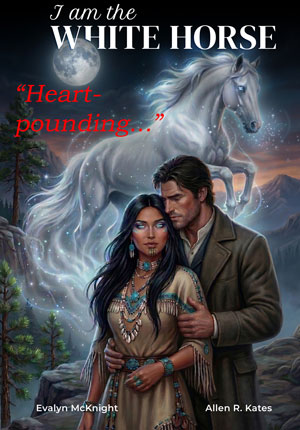
Fated Mates
The most prominent and
consistent recurring theme or trope in I Am the White Horse is Fated Mates. From an early age, thousands
of miles apart, Little Dove and James see each other in their dreams and can’t
get the images out of their minds. They don’t know who each other are or even where
they live.
The attraction is
more than powerful. It is overwhelming and their life’s mission is to find each
other. James leaves Ireland, crosses a vast ocean and then travels thousands of
miles inland to the Old West in search of Little Dove.
In this
high-stakes, multi-layered Romantasy, they finally find each other, but are torn
apart, first by obligation, then by enemies, a dark, evil force, loss and
grief. We don’t want to give the story away. But after much strife, HEA
(happily ever after) prevails.
In secondary subplots, allies share the Fated Mates destiny. Their narratives resonate with the main love story, deepening the emotional themes, making the primary romance feel heavier and more meaningful. The villainess finds
her Fated Mate, but in contrast or counterpoint to the protagonists’ story. The
heroes experience true, all-consuming, tender love. However, the villainess
experiences love as a way to manipulate the man she loves, not as a means to
enhance her life. She wants to love him but doesn’t know how and has difficulty
fighting the evil forces inside her, despite Little Dove trying to help her.
Other tropes that
appear in the story are: Found Family, Historical Plural Marriage, Pregnancy, Resurrection,
Historical Western Frontier Romance/Historical Fantasy, Romantasy/Paranormal.
Indigenous MC, Shapeshifter, Take-Charge-Badass-Heroine, Alpha Male, Magical
Creature, Guardian Spirit, Self-Destructive Villainess.
Overall, the story is a blend of genres: Romantasy, PNR, Historical (Victorian) Western and open-door romance.
Yet the writing offers more than your typical love story. It crosses over from popular fiction into narrative literature. Editorial reviewers unanimously agree that I Am the White Horse has literary depth where style, psychological realism and thematic resonance are central over formulas.
The prose delivers rhythm, subtext and precise imagery. The characters are complex, defying cartoon labels. They wrestle with love, grief, memory and contradictory motives. No one is all good or all bad.
The plot is a vehicle not only to reveal a very intense love story, but as a way to explore universal human conditions such as the need for connection and the capacity for empathy, and philosophical questions like why people treat each other the way they do.
At times, the story provides lyrical, elevated prose and bridges page-turning momentum with literary craft. Despite focusing on Fated Mates, the story and character growth and development go beyond the trope and examine human psychology and the human heart. The prose is rich, full of sensory texture and imagery, tastes, smells, touch, sound patterns, voice and mood, making the how of the storytelling matter as much as the what.
Often the story twists and turns against expectations and surprises the reader. The reader may expect one thing, but gets something unexpected and wonderful. The lyrical prose ties its beauty and rhythm to the emotional core and clarity of the story and its characters. The narrative turns on mystery, suspense and tension, making it an adventure for the reader.