![Fated mates Content Warning]() Fated mates Content Warning
Fated mates Content Warning
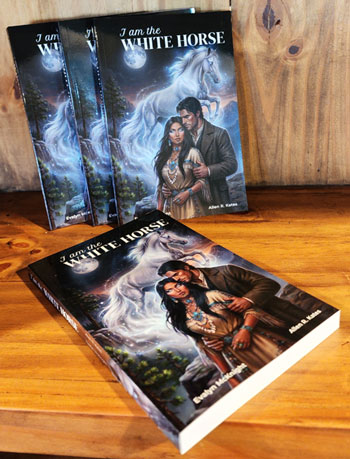
Romantasy Irishman and Native Woman Supernatural White Horse
Content Warning
Audience: 18 and Older
The story takes place in the late 1800s during a turbulent time in America’s Old West, particularly in Arizona and California. Native Indians were hunted down and moved to reservations, their children incarcerated in boarding schools. Many were killed for bounties. Their culture and way of life were systematically destroyed.
Before the Europeans appeared in 1492, there were roughly 10 to 18 million indigenous people living within the current U.S. borders. About a century later, Eurasian diseases like smallpox, measles and influenza brought by the settlers and military, along with wars and forced labor, killed an estimated 90% of their population. By 1800, about 600,000 remained. By 1900, their numbers dwindled to less than 250,000.
The lure of gold and free land attracted many immigrants from overseas, especially from Ireland, to escape abject poverty and Britain’s ruthless control. Into this environment, our protagonists, Little Dove and James, find each other, after many years of seeing each other in their dreams. A magical white horse helps them navigate difficult and dangerous times.
The book is a Romantasy, primarily about the characters’ love for family and the extraordinary lengths they go to to protect them. It’s those lengths that lead to anguish and violence in order to defend those they love. Mostly, the book is HEA, about love, caring, respect, tolerance, the acceptance of others, the bonds of family, and the desire to be left alone to determine their own destiny.
Note that the indigenous population is called “Indian,” as recommended by two Native American historians. Indians did not become American citizens until 1924, whereas most of the story’s action happens in 1897.
The following are
content warnings so the reader knows what to expect. Nothing is done gratuitously, just for the sake of doing them. Most of the violent scenes are
quite short.
Content Warning
· A bear is killed during a fight with the beloved
white horse.
· Native Indians such as the Tohono O’odham are
hunted.
· An attempted rape of a Native Indian woman is
thwarted.
· The protagonists and their friends are attacked by
a psychopathic villainous and her mercenary army, determined to
wipe them out. Despite
the romantic story being HEA (Happily Ever After), some of their friends and
loved ones are
killed or wounded.
· The protagonists experience loss and grief.
· Tohono O’odham and Chiricahua Apache
funerals take place, as well as a Jewish and a Christian burial, all respectful
and
authentic for the time.
· Attempted abduction of a newborn is thwarted.
· A rogue wave pulls a child out to sea, but she’s
saved.
· References, but not scenes, of Indian massacres.
· Scenes of warfare.
· Brief scenes of explicit, loving intimacy. 4/5 chili peppers.
**The violent scenes are offset and minimized by the scenes of loving, caring and support.